HVAC Optimization Through RMR's Connected Buildings Platform
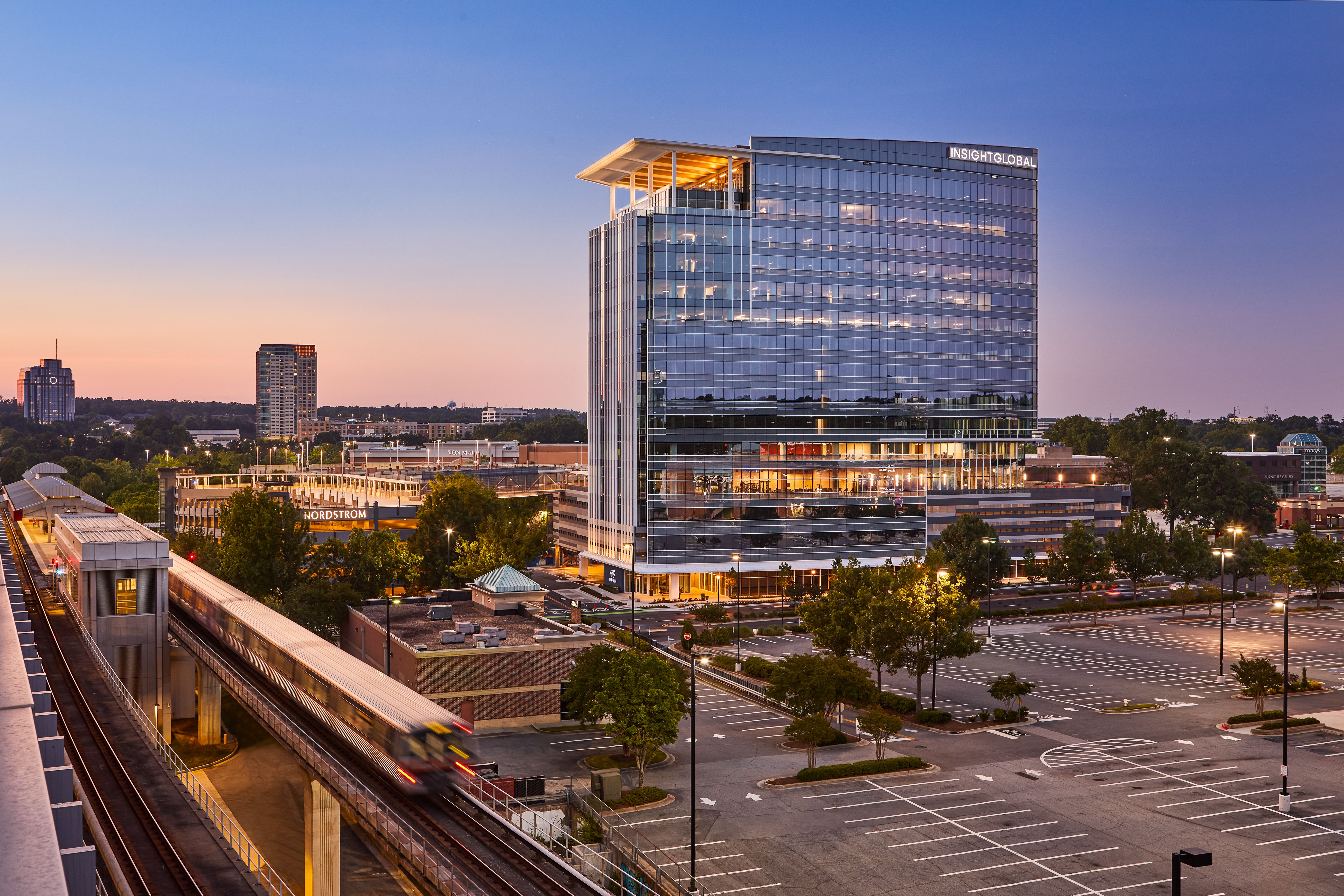
Technology‑enabled diagnostics resolve inefficiencies and drive meaningful energy savings at 1224 Hammond Drive.
When RMR, on behalf of its client, acquired 1224 Hammond Drive - an Atlanta high‑rise office property - the building’s condenser water loop was operating in a way that created unnecessary energy use, equipment strain and avoidable operating expense. The system continued running well into nighttime hours, even when no cooling was required, and the building was unable to transition into proper low‑load or no‑load modes. Erroneous after‑hours signals for heating and cooling repeatedly triggered unwanted system activity, but without real‑time visibility into equipment behavior, the root causes were difficult to detect. As a result, the property experienced elevated utility consumption and accelerated wear on pumps and cooling tower components. Upon assuming management, RMR recognized that addressing these inefficiencies required a coordinated approach across technology, operations and engineering. Integrating the property into RMR’s Connected Buildings Platform became the foundation for a data‑driven solution.
Our approach
Soon after onboarding the building, RMR’s Energy & Sustainability and Asset Services teams connected 1224 Hammond Drive to the firm’s Connected Buildings Platform. This integration enabled continuous real‑time monitoring and the deployment of Fault Detection and Diagnostics (FDD), allowing teams to observe equipment behavior at the zone level and identify patterns that traditional monitoring methods often miss.
With access to granular system data, RMR’s teams were able to evaluate sources of the unnecessary after‑hours HVAC calls and diagnose control logic issues that were forcing the condenser water loop to run when cooling demand was nonexistent. On‑site reviews, combined with careful analysis of Building Automation System (BAS) programming, revealed misaligned setpoints and logic sequences that prevented proper nighttime setback.
Using these insights, RMR implemented targeted corrections. Setpoints were adjusted to allow the building to enter appropriate low‑load modes, and condenser water loop controls were reprogrammed to scale down - or shut off entirely - during periods of minimal demand. The integration of additional zone‑level equipment into the BAS further expanded operational oversight, creating a more cohesive and responsive control environment.
Impact & results
The improvements made at 1224 Hammond Drive required no capital investment and are projected to deliver approximately $20,000 in annual utility savings. By eliminating unnecessary overnight operation, the property now consumes significantly less energy, operates more efficiently, and experiences reduced wear on mechanical equipment - a benefit that extends the expected life of both pumps and cooling tower components.
Beyond the direct financial return, the initiative showcases the power of RMR’s Connected Buildings Platform to uncover inefficiencies that are often hidden without continuous digital monitoring. The combination of real‑time visibility, FDD analytics and coordinated action between Energy & Sustainability and Asset Services resulted in both immediate and long‑term value for the property.
Link copied to clipboard!
More from across the RMR platform.
Explore additional insights, analysis and case studies that expand on the strategies, sector trends and real‑world execution underpinning RMR’s approach to value creation.

The RMR Group turns overlooked assets into outperformance. With ~$40B under management, 1,000+ real estate experts and a 40-year track record, we don’t wait for the market — we shape what’s next, because Potential isn’t Patient.


The Firm
Businesses
Our Platform
Insights
The RMR Group turns overlooked assets into outperformance. With ~$40B under management, 1,000+ real estate experts and a 40-year track record, we don’t wait for the market — we shape what’s next, because Potential isn’t Patient.
Copyright © 2026 The RMR Group
Copyright © 2026 The RMR Group